RISSHODO
Dough making
At Risshodo, every morning starts with the process of making dough from carefully selected rice, which is then flattened into a round shape. The rice is steamed to turn into mochi, and then dried to turn into dough, a process that requires skilled techniques.
Step 1Wash the rice
Rice is carefully washed to make the most of every grain
The rice is put in by the staff and quickly washed using a unique method, while being careful to preserve each grain’s flavor. Once the rice is washed, it is sent to be milled. Even during this process, care is taken to keep the surface from drying out by running water over it before moving on to the next step.
Step 2Milling
Rice flour with concentrated flavor is immersed in water to enhance the texture
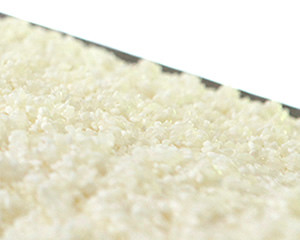
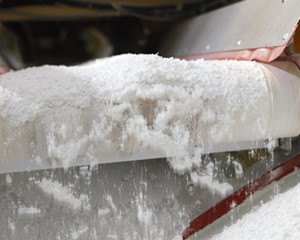
Next, the rice is soaked in water and then milled. This process is important as it determines the texture of the rice crackers. By milling the rice while preserving its natural properties, it has a positive effect on the dough. Just by looking at the moist rice flour, you can sense the flavor and texture.
Step 3Steaming and kneading
Steaming and kneading the dough determine its quality
The rice flour is made into mochi. The softness of the dough at this stage determines the quality of the senbei. The mochi is steamed evenly and kneaded to give it firmness. It is not made by machines alone, but by craftsmen who check the condition of the mochi. Of course, it is delicious even if you eat it at this stage.
Step 4Cooling
Cooling to lock the flavor of the mochi
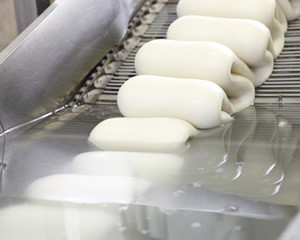
Freshly made, piping hot rice cakes are cooled in a large amount of water. They are then cooled slowly and allowed to settle. This unique cooling process locks in the rice cakes’ flavor and strengthens their firmness, resulting in the texture of “Junmai Senbei.”
Step 5Cutting out and sorting
Molded mochi is selected by skilled craftsmen
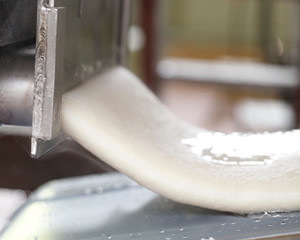
The dough is cut into a circular shape. Although the cutting is done by machine, the dough can sometimes be torn. Therefore, after cutting, a skilled craftsman carefully removes any dough that has lost its shape. This process has remained unchanged since the product was first made.
Step 6Primary drying
Allow to dry slowly and thoroughly to remove excess water
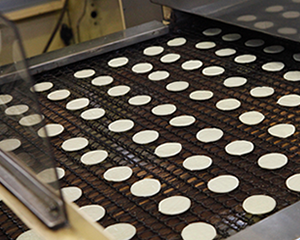
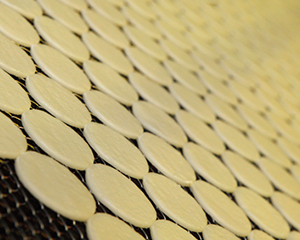
The cut-out dough is dried thoroughly in a dryer. The dough is soft when it goes into the dryer, but by the time it comes out it has become hard and white. At this point it hasn’t yet resembled “Junmai rice crackers,” but its appearance and shape will change dramatically during the baking process.

Grilling and seasoning
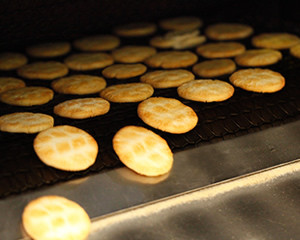
When the dough is baked slowly, the hard white dough changes shape into plump, thick rice crackers. Then, after seasoning with a secret recipe, the familiar “Junmai Senbei” finally appears. Lastly, it is packed in one go, and ready to be seen in the store.
Step 7Secondary drying
Final drying ensures even baking
The dough for “Junmai Senbei” is dried a second time. In order to achieve the ideal thickness and texture, the dough is dried before baking, which dries the deep parts that could not be reached by the first drying, minimizing unevenness in the baked product. This extra step has a big impact on the appearance and texture.
Step 8Baking
craftsmen’s skilled technique ensures consistent texture no matter the season
The neatly aligned dough is then slowly baked in a special oven. By changing the oven temperature and baking time according to the season, it is possible to bake Junmai Senbei with the same texture all year round.
Step 9Seasoning
The flavor is perfectly evenly distributed throughout
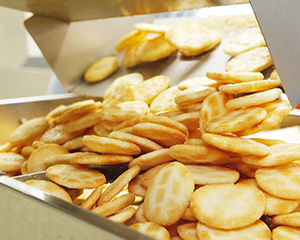
The secret recipe has been remained unchanged since the product was first made, giving it the flavor of “Junmai Senbei.” You can feel the smell and the rich flavor of the rice crackers come together exquisitely once you put our rice crackers in your mouth. We have also made repeated improvements to the amount of pressure used to prevent cracking and chipping.
Steps 10Packaging
Individual packaging while being inspected with the help of both machines and staff
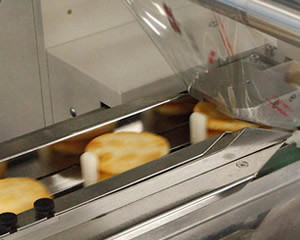
In a controlled inspection room, the rice crackers are packed in pairs, undergoing multiple inspections by the latest equipment and skilled staff. At this stage, any rice crackers that seem to be out of standard due to weight or size, or unsuitable for commercial use, are removed, and only the best quality ” Junmai rice crackers” are packed.
Step 11Outer Packaging
The freshly made Junmai senbei will be quickly delivered to customers
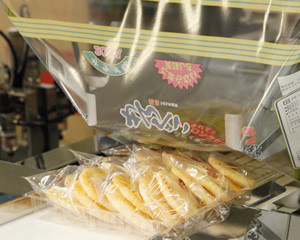
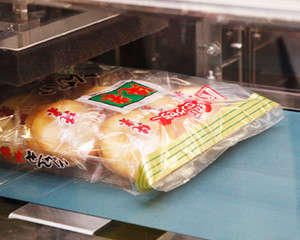
To deliver freshly made “Junmai Senbei” to you as quickly as possible, we pack them in large bags from the individual packaging all at once. We take great care to prevent the items from breaking during packaging, using the same amount of pressure we have improved over time, and have multiple staff members check the number of items before the package is completed.
Completed